

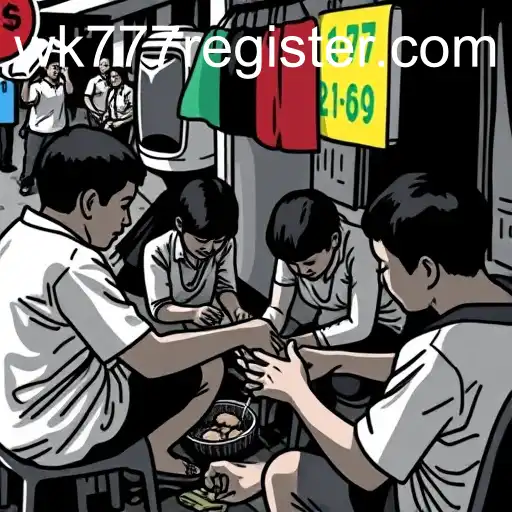

Jueteng is a numbers game that has deeply embedded itself into the cultural fabric of the Philippines. Unlike legal forms of gambling, jueteng operates outside the confines of government regulation, flourishing in the informal economy. Despite various efforts to eradicate or regulate it, jueteng persists as a widespread practice, driven by socio-economic conditions and local cultural dynamics.
At its core, jueteng is a simple game of chance. Participants choose a combination of numbers, typically between one and thirty-seven. Bets are placed on these combinations, with winning numbers drawn in secret by the game operators. If a participant's number combination is selected, they stand to win a significant monetary reward relative to their initial bet. This allure of potentially high returns on small bets fuels the game's popularity.
The roots of jueteng can be traced back to Spanish colonial times, illustrating its deep historical and cultural significance. Over the decades, the game has evolved, adapting to modern contexts while retaining its traditional essence. Jueteng’s evolution also reflects broader socio-political changes within the Philippine society, often linked with issues of governance and illicit economies.
The impact of jueteng on Philippine society is multifaceted. Economically, it provides income for a vast network of individuals, ranging from low-income bettors to operators entrenched within local power structures. This economic benefit often outweighs the risks involved for participants, making it a persistent socio-economic phenomenon. However, jueteng also diverts potential government revenue and often contributes to corruption.
Corruption plays a significant role in the proliferation of jueteng. Despite legal statutes aimed at curbing illegal gambling, enforcement often falls short due to corrupt practices. Local officials and law enforcement officers sometimes receive kickbacks from jueteng operators, creating a cycle of complicity and allowing the game to thrive under the radar of legal scrutiny.
Jueteng’s reach extends into the political realm, influencing local and national politics. Political patronage systems may leverage jueteng networks to secure votes, often blurring the lines between illicit economic activity and political maneuvering. This symbiotic relationship complicates efforts to eradicate jueteng, as many entrenched interests have stakes in its continuation.
In recent years, technology has started to play a role in the evolution of jueteng. The advent of digital communication channels and mobile technology presents new opportunities and challenges for both operators and authorities. While technology offers new avenues for expansion, it also provides tools for more effective monitoring and enforcement actions. However, technological adaptation also raises questions about the changing landscape of gambling practices in the digital age.
Efforts to combat jueteng have taken various forms, from law enforcement crackdowns to attempts at legalization and regulation under government supervision. However, these initiatives often face significant political and logistical hurdles. The challenge lies in creating an alternative that balances social needs with effective regulatory frameworks.
The debate between legalization and strict enforcement is ongoing. Proponents of legalization argue that formalizing jueteng as a legal entity could reduce corruption and harness gambling revenues for public good. On the other hand, opponents insist that legalization might legitimize an industry that exploits vulnerable populations. Thus, the discussion continues, reflecting broader global conversations about gambling regulation.
Jueteng remains a resilient aspect of Filipino life, surprisingly stable amidst the ever-changing socio-political landscape. While its future is uncertain, jueteng’s existence exemplifies the complex interplay between culture, economy, and politics in the Philippines. Understanding this interplay is crucial for those who seek to address the challenges this long-standing issue presents.

Discover the exciting gameplay of FaFaFa and how it intertwines with the WK777 keyword for an enriched gaming experience.

Discover the unique gameplay and captivating experience of GreatLion, a new favorite in the gaming community.

FootballBaby is a captivating game that combines strategy and excitement, engaging players with its dynamic gameplay.

Discover the exhilarating gameplay of ZumaWild, an engaging game that combines adventure, strategy, and fun.

Dive into the captivating world of FortuneHookBoom, a thrilling blend of strategy, luck, and innovation in the gaming landscape. Uncover its intricacies and emerging trends.

Dive into the enchanting world of ParadiseBeach, a game that combines tropical adventures with challenging gameplay using the exciting WK777 feature.
